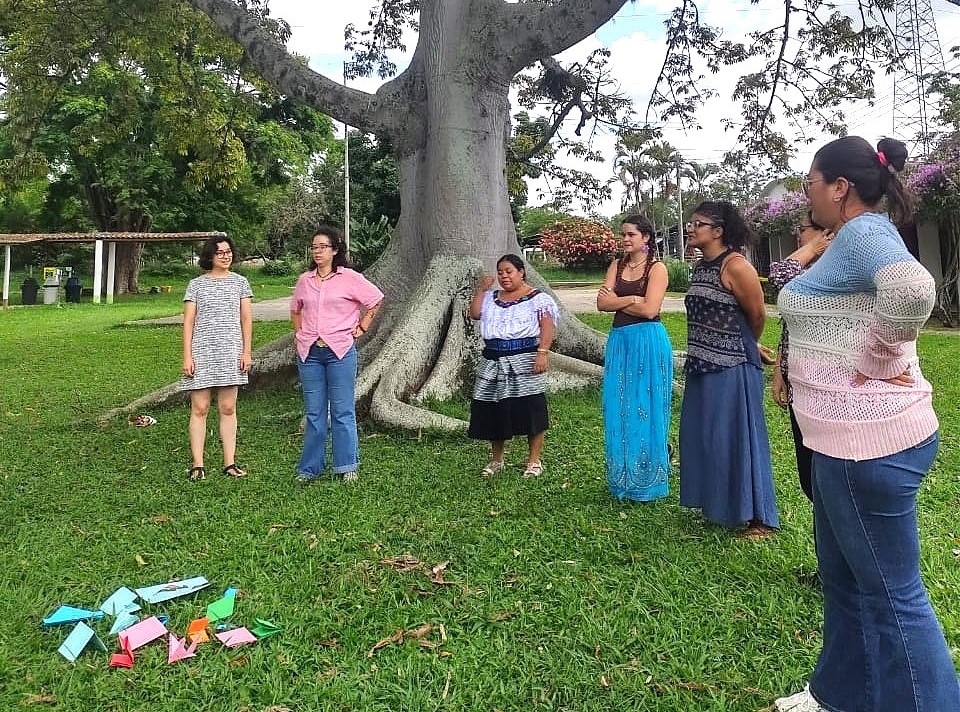
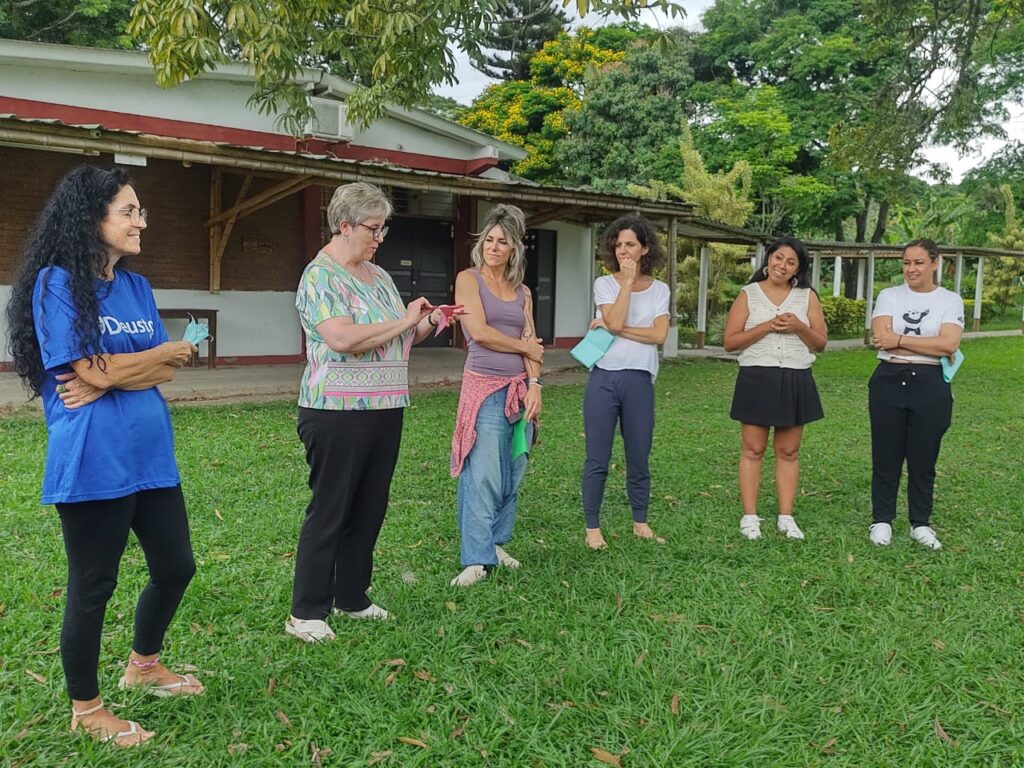
With a chorus of voices repeating “To care and know that we are never alone!”, the First Meeting of the Gender Working Group of the COMPARTE Network came to a close. The event was held at the IMCA (Instituto Mayor Campesino) headquarters in Buga, Colombia, from October 20 to 25.
Over five days, 16 women from different social centers and organizations across Latin America and the Basque Country shared experiences, reflections, and learnings about gender equity, care, and transformative leadership at the various levels of the Network’s action.
For Arantza Cuevas, from Yomol A’tel (Mexico), the meeting was “literally about building a network. Meeting women who work on similar issues. Building a network for women revitalizes us. That is where strength is born. It’s about recognizing that beautiful spaces exist even in difficult contexts, because many times we feel alone on this path.”
She added, “The discussions we’ve had will continue, but the most valuable part has been the encounter among us: sharing, getting to know each woman’s personality and spirit. It was important that, within this same space, those who usually provide care were the ones being cared for. I leave with a sense of calm and with the idea of connecting leadership with mental health, work overload, and care. It makes me reflect: How are we, from our social centers, supporting women in their leadership?”
From Hogar de Cristo (Ecuador), Jessica Ochoa highlighted that this space “has been an opportunity to renew myself and be nourished by the experiences of other social centers. It offered much learning and the possibility of joining thoughts, ideas, and paths from our different work spaces. I’ve felt valued for being able to open up to a group of women who face similar challenges. It was a space where I felt appreciated, nourished, and strengthened. As women, it was a moment to embrace one another and know that we are not alone—that we can achieve great things together.”
She added that the meeting “sparked great hope, seeing that much more can be done to strengthen the gender perspective in our social centers and within the Network.”
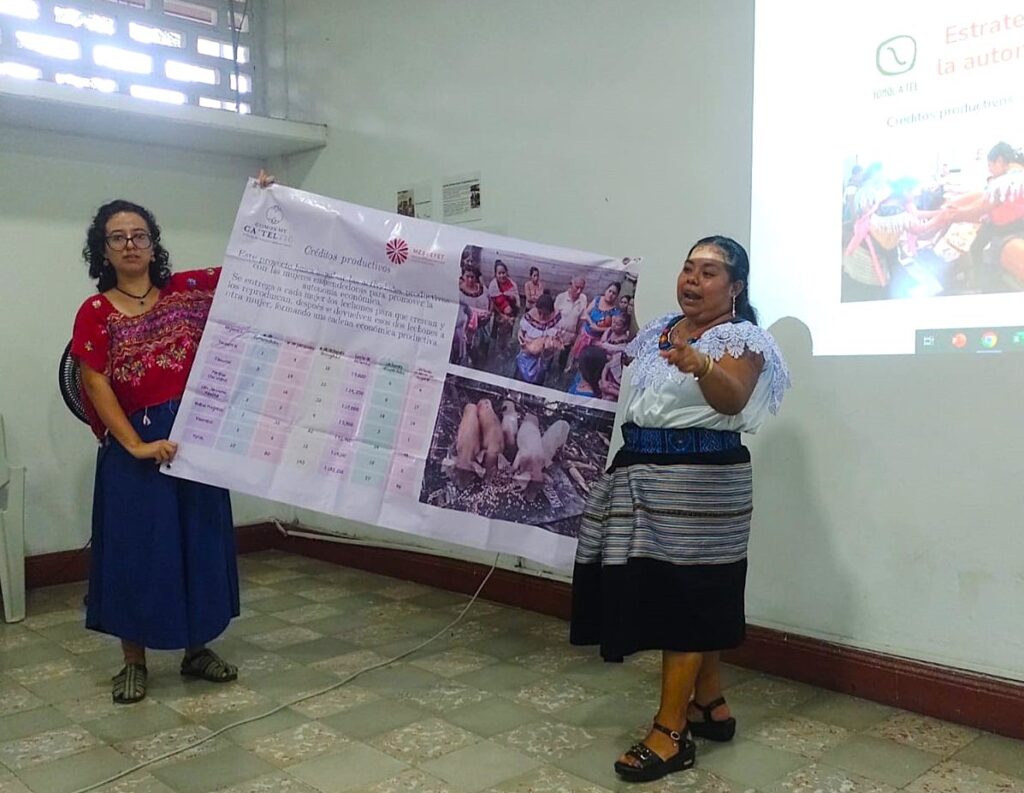
During the gathering, women shared their testimonies of autonomy and leadership, as well as pro-equity strategies being implemented in various social centers, producer organizations, and partner universities.
The group also presented progress on the development of the Common Gender Framework of the Network, which began in March of this year with the participation of eight social centers and one producer organization, along with the initial findings from the systematization of pro-equity improvement actions carried out between 2023 and 2024.
Concepts such as co-responsibility, care economy, common home, intersectionality, gender-based violence, leadership, alliances, psychosocial support, new masculinities, interdependence, interculturality, spirituality, feminisms, and autonomy were present—explicitly or implicitly—throughout the dialogues, together with questions that touch everyday life: Whom do we care for? Who cares for us? How do we care? How is care distributed?
This wealth of experiences and knowledge helped identify key factors for the continuity of gender work across the three levels of the Network, in coherence with Feature 3, which states:
“From feminist perspectives, they promote gender equity/equality and contribute to the empowerment of women.”
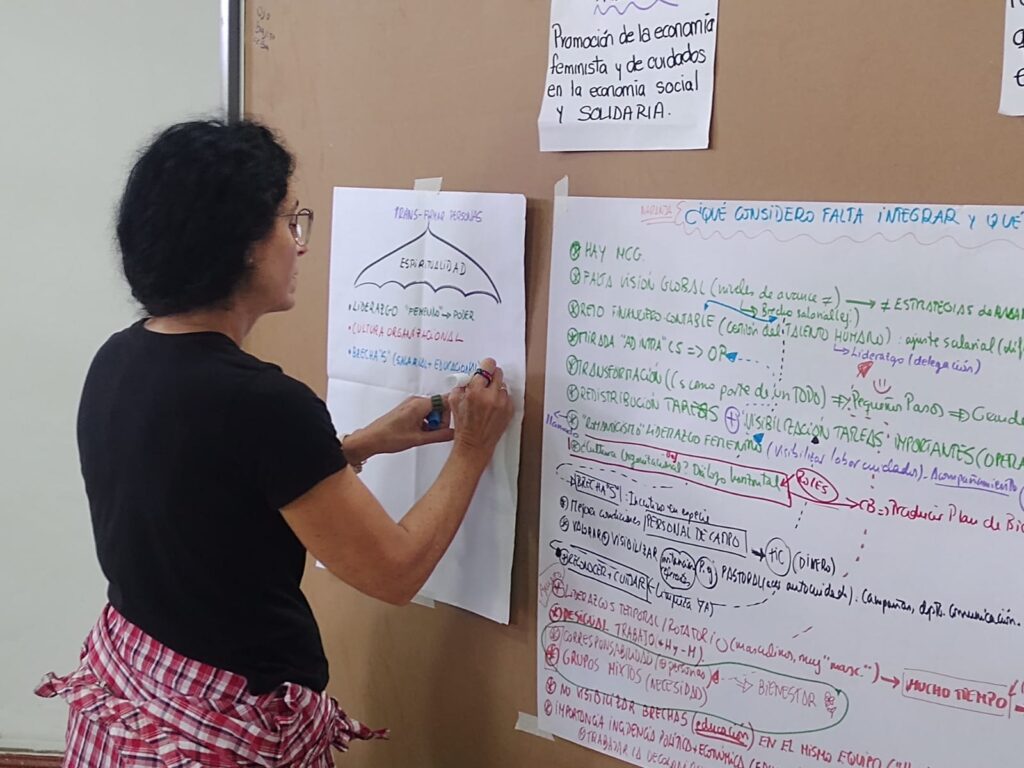
While not exhaustive or final, the meeting highlighted several areas for further development and strengthening:
Areas to Deepen
Transformations from Within: Equity and equality must “become part of who we are.” Social center teams need to embody these transformations internally in order to accompany producer organizations coherently.
Reflection on Care: Integrate a comprehensive view of co-responsibility and care as the foundation of daily life in social centers.
Sustainable Leadership: Promote shared, empathetic, and rotating leadership, avoiding heroic or self-sacrificing models.
Intergenerational Dialogue: Recognize that youth and children have their own voices, dreams, and contributions—and should not be seen merely as a “next generation.”
Strategies to Strengthen
Psychosocial and Identity Strengthening: Gender discussions must include mental health and integral care.
Academic Alliances: Partner with universities and research centers that work on the care perspective to enrich reflection and practice within the Network.
New Masculinities: Advance this reflection through male alliances both inside and outside the Network.
Experience Exchange: Foster exchange among social centers, producer organizations, and external partners.
Resource Management: Prioritize gender equity actions as central to management—not as a complement to economic or productive dimensions.
Recognized Strengths
Inspirational leadership of Sandra Delgado (ALBOAN) and Marly Zambrano (Suyusama), who have energized the Gender Working Group’s efforts within COMPARTE’s strategic plans to deepen Feature 3.
Lived spirituality (not necessarily religious) as a protective framework and source of transformation within social centers.
Institutional policies and gender teams already active in several member centers of the Network.
Network-managed financial resources supporting awareness-raising, training, communication, advocacy, and policy development around gender equity.
Strategic partnerships with organizations such as Reas Euskadi, University of Deusto, and LAINES, which have contributed to training, systematization, and the development of COMPARTE’s Common Gender Framework.
The Gender Working Group of the COMPARTE Network was established in 2020, following agreements from the 2019 General Assembly held in Mexico. Since then, the Group has met virtually every two months to energize strategies and actions within the Network’s Strategic Plan related to Feature 3.
Currently, the Group includes representatives from Suyusama and IMCA (Colombia), Hogar de Cristo (Ecuador), Yomol A’tel (Mexico), SAIPE (Peru), ALBOAN (Basque Country), and Solidaridad CVX (El Salvador).