

Comparte is a network founded in 2010 with the goal of contributing to the generation of economic and productive alternatives that offer dignified living conditions to excluded populations in Latin America. Faced with the reality of exclusion and dispossession experienced by a large part of the population in Latin America, we focus our work on creating and strengthening alternatives that enable the defence of territories, allowing their people to remain and build a good life.
The true protagonists of Comparte are rural communities, indigenous and Afro-descendant peoples, as well as individuals from marginal urban areas, brought together in a wide range of organisations that manage economic and productive initiatives across different value chains: agricultural, livestock, diversified agro-industrial, services, and manufactured products.
“Humanity is called to recognise the need for lifestyle, production, and consumption changes”
Laudato si’
COMPARTE DATA
SOCIAL CENTERS IN MEXICO, GUATEMALA, EL SALVADOR, HONDURAS, CUBA, COLOMBIA, ECUADOR, PERU, BRAZIL, BOLIVIA, PARAGUAY, BASQUE COUNTRY
We are 18 social centres, 17 in Latin America and 1 in Europe
Over 50,000 families developing economic and productive initiatives
More than 25 allied entities in Latin America, Canada, Europe, and the United States
More than 13 agricultural products and services offered by the producer organisations in Latin America
Testimonials
Discover the opinions and testimonies of members of COMPARTE.
 Patricia Serrano, ACLO, Bolivia
Share is a space for inter-learning that strengthens our service by working with actors from different countries and by scaling up our interventions, making our common achievements visible in different territories.
 Gerardo Morales, ASCVX, El Salvador
Comparte has been a reference for our organization. We both seek an alternative development model in dialogue with those we work with. We perceive a feeling of “walking together”, of being part of a network that is being built.
 Alix Linares, Fundación SUYUSAMA, Colombia
The very name of the Comparte Network inspires us to understand ourselves in a complex interdependence, inviting us to feel part of the links that allow the construction of the collective.
 Ivonne Guzmán, CINEP/Programa por la Paz, Colombia
We have incorporated the integral ecology approach into our strategic planning. Comparte is an opportunity to deepen our reflection and practice on this, the relationship between the enforceability of human rights and economic productive alternatives, issues of agroecology and responsible consumption. It is a path to be built.
 Jenny Mera Suárez, Viviendas Hogar de Cristo, Ecuador
Hogar de Cristo Housing has experienced a strengthening of its capacities by being part of Comparte. This has allowed it to become an entity that reproduces capacities. Strengthening capacities is essential to prepare the human resources that facilitate the learning processes and promote gender equality and the participation of women in decision-making in the social center and in the producing organizations.
 Simón Martínez, CEPAG, Paraguay
Being part of Comparte has been an enriching experience for our social center. Collaboration with this initiative has allowed us to expand our reach and provide greater support to our community.
 Edith Condeña, CCAIJO, Perú
My husband worked in the mining industry, I worked as a housekeeper and my children were under the care of their grandparents. I trained at CCAIJO to raise guinea pigs, I invested in installing pasture and a shed, and my guinea pigs were bred. Every day required dedication, my husband noticed that I needed help, and we both quit our jobs. Now, we both dedicate ourselves to our business, we are together with our children and living as a family.
 Christian Flores Carmen, CIPCA, Perú
Comparte provides the possibility of articulating efforts to promote integral ecology and the development of alternative economies, providing opportunities to share methodologies for the implementation of processes such as participatory guarantee systems and marketing circuits. It helps to strengthen the capacities of the social center staff and of the producer organizations in a network with other institutions. It integrates the social centers into reflection groups for the participatory definition of strategies that help to have more effective interventions in the areas of action.
 Amaia Unzueta, Alboan, País Vasco y Navarra
The Comparte network provides us with an alternative practice and narrative to the dominant socioeconomic model, demonstrating that there are other ways to make the economy more humane and in harmony with nature. Being part of this network nourishes the hope that it is possible to choose to generate economic alternatives that generate decent livelihoods, and helps us develop our work of raising awareness and educating for socio-environmental justice.
 Cristina Méndez Álvarez, Yomol A´Tel, México
The network provides training and support to grassroots organizations and economic-productive processes of the Social and Solidarity Economy (SSE) with a gender perspective.
 Sonia Laura, CIPCA, Bolivia
We value the Socio-Environmental Audit System (SASA) as a contribution to our institutional monitoring system, mainly in the social and environmental dimension. We also value the spaces for exchanging experiences related to ventures such as honey, agroforestry systems and cocoa.
 Claudia Ruiz, ASERJUS, Guatemala
Being part of the networked community provides us with content to improve the practice of supporting community organizations and the sense of belonging and identity. Contributing in reciprocity elements from the worldview of indigenous peoples in Guatemala to the alternatives to development that we are building as a network.
Latest news
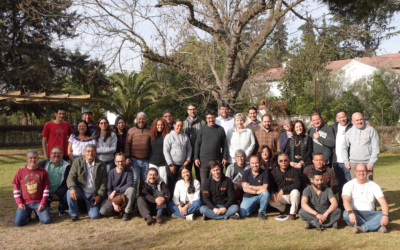
Red Comparte gathers in Santiago de Chile to review its path and dream of the future
From July 10 to 12, Red Comparte held its in-person assembly in Santiago de Chile, at Casa de Ejercicios Loyola. The gathering brought together representatives from 16 of the Network's social centers, its coordinating and technical teams, and professors from partner...
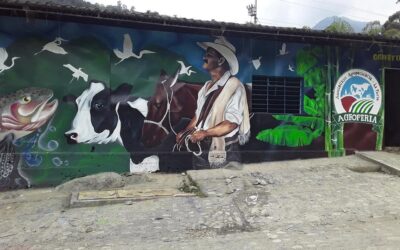
Collective efforts strengthen productive initiatives within the framework of SASA
The Socioeconomic-Environmental Audit System (SASA), promoted by the Comparte Network, continues to demonstrate how collaboration among stakeholders is key to strengthening sustainable economic initiatives in local communities. Feature 2 of the SASA focuses on...
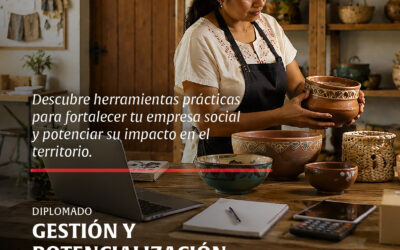
The Diploma Program in Management and Strengthening of Social and Solidarity Enterprises Begins: A Latin American Commitment to Strengthening Life-Centered Economies
With the participation of 38 registered participants from eight Latin American countries—Mexico, Colombia, Peru, El Salvador, Guatemala, Ecuador, Paraguay, Bolivia, and the Basque Country—members of the Comparte Network and the International Research Center for Social...