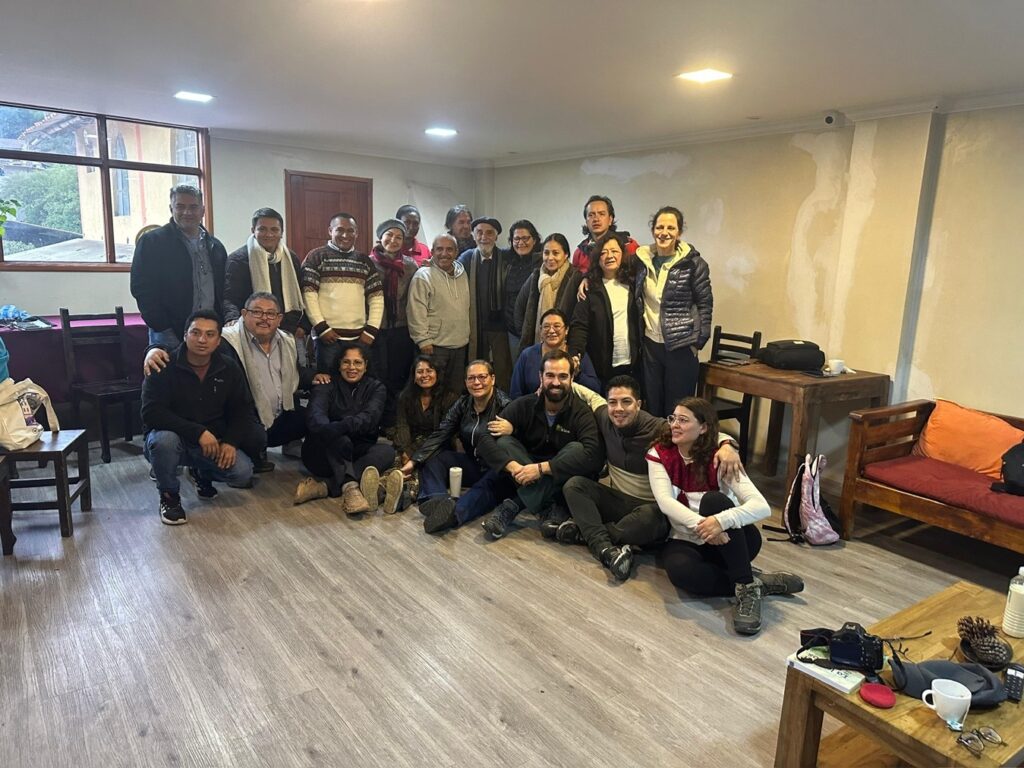
Between November 10 and 15, the 3rd International Gathering “Interweaving Roots: Solidarity Economic Circuits (CES)” was held, supported by the cooperation agreement between the Red Comparte and Reas Euskadi: “Intercooperate to Transform the Economy.” On this occasion, delegations from Guatemala, El Salvador, Colombia, Ecuador, Peru, Paraguay, Mexico, and the Basque Country came together to promote these Solidarity Economic Circuits as an effort to territorialize the social and solidarity economy and agroecology in favor of the sustainability of life, contributing to the construction of buen vivir.
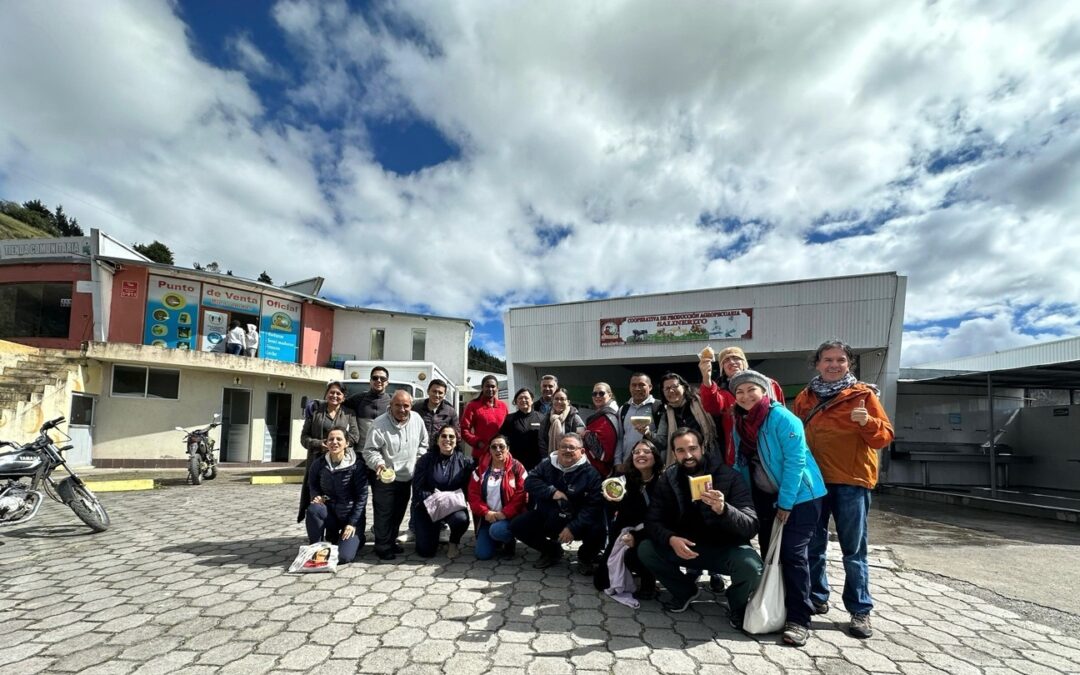
Our host territories were Guayaquil and Salinas de Guaranda in Ecuador, where the organization Hogar de Cristo arranged all the logistics to make us feel at home and where we were able to learn much more about the work of Hogar de Cristo and the experience of El Salinerito.
In the first days of work, each CES presented its progress and challenges, sharing significant experiences that, together with other presentations, allowed us to reflect on the steps we need to take to continue nurturing the ground and interweaving roots—consolidating this methodological and political strategy that seeks to articulate different expressions of the social and solidarity economy in the territories. These expressions include the production, processing, marketing, financing, consumption, and post-consumption of products and services that aim to address the needs of each community where the CES are rooted.
Ethical Framework and Territorial Praxis:
Day Three of the Solidarity Economic Circuits Gathering of RED COMPARTE
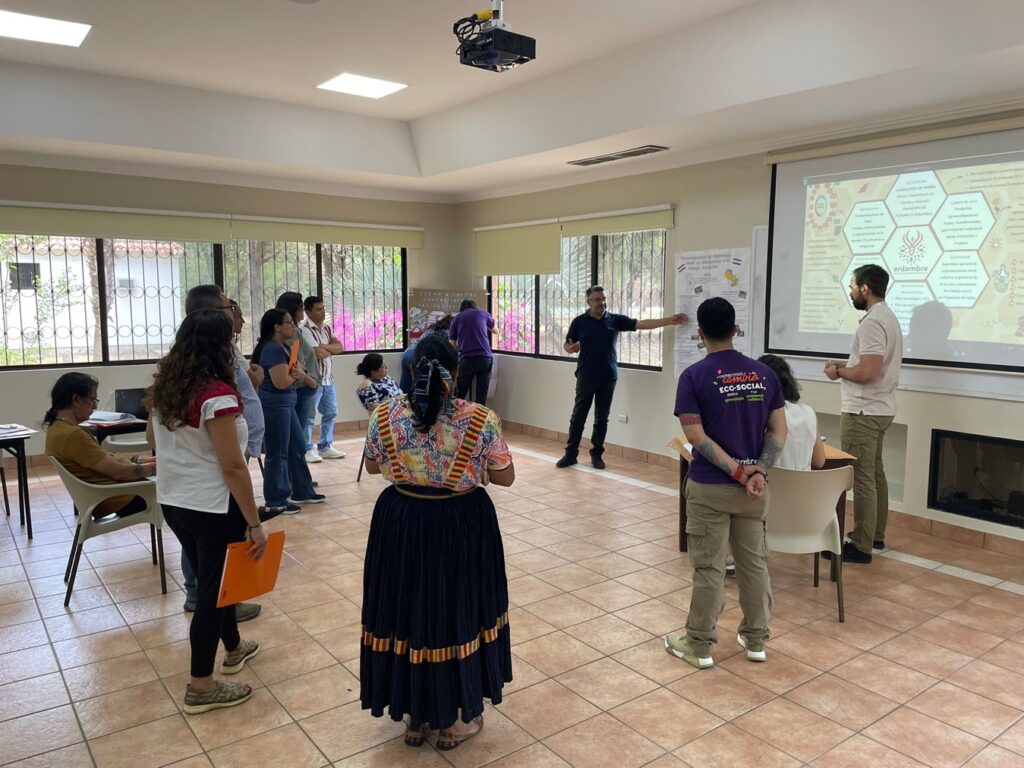
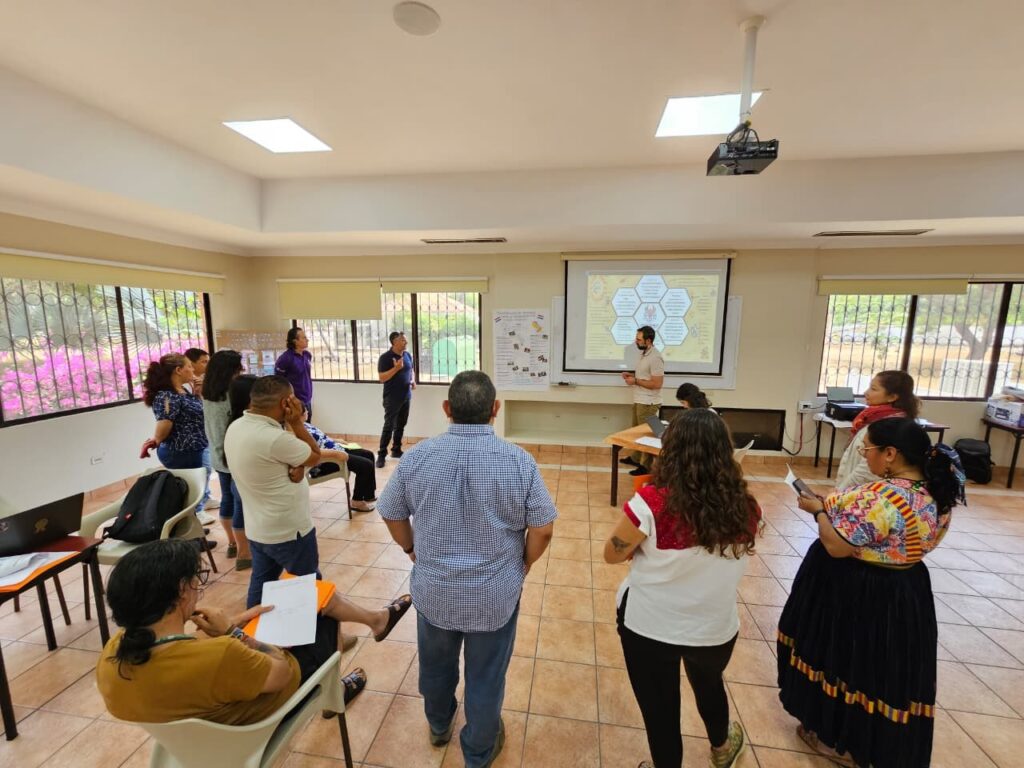
The third day, held on Tuesday the 11th at the San Francisco Javier Retreat House in Guayaquil, brought together virtual dialogue and on-site work: the Ethical Framework proposal shared by REAS Euskadi, the collective testing of an indicator set, and the presentation of pedagogical experiences converged in a day designed to turn global commitments into local practices. It was a day of testing, adjusting, and learning in which technique and ethics were placed at the service of building solidarity-based modes of production.
Participants from the Social Centers followed the virtual presentation by Zaloa and Silvia from REAS Euskadi and worked with the proposal as a starting point for discussion. It was emphasized that the Ethical Framework must be understood as a compass: its true value becomes evident when communities interpret it, make it their own, and incorporate it into their organizational dynamics.
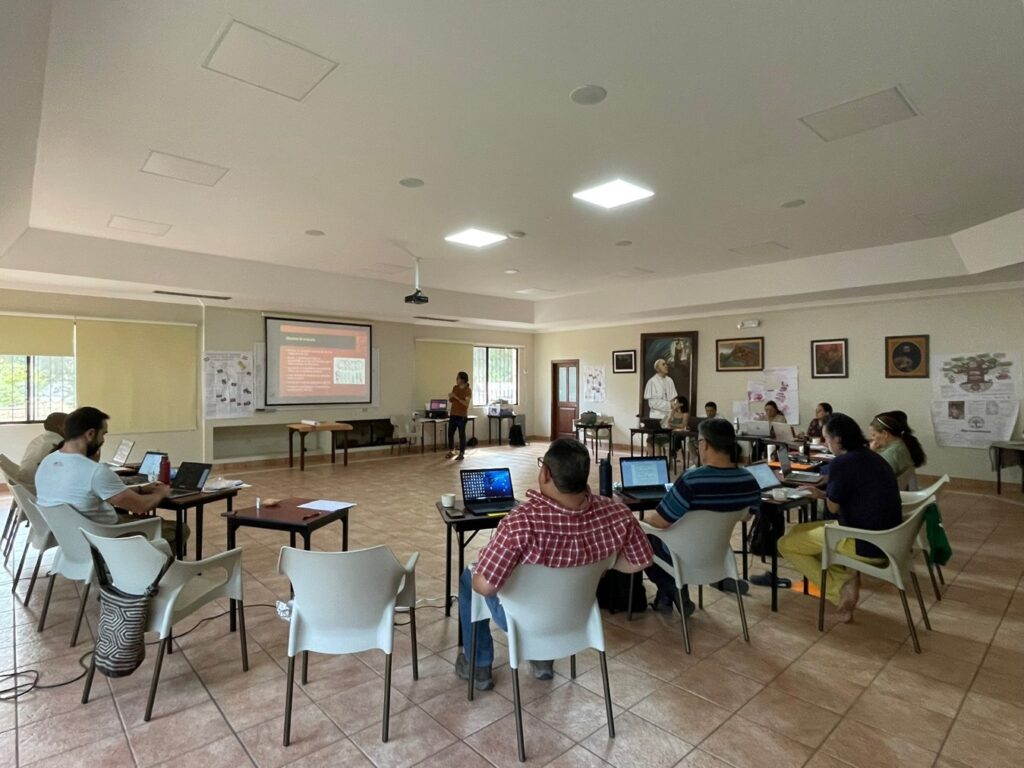
Work then continued with the CES Indicator Set, where we organized into groups to review our progress. Teams analyzed the relevance of each metric in relation to territorial realities, identifying questions and challenges in the formulation of phases and variables. The exercise showed that indicators are bridging tools: useful for making results visible on a broader scale, but needing to be reconfigured through participatory formats connected to local dynamics.
The Red Enjambre School and the popular education processes facilitated by Solidaridad CVX closed the day with territorial training proposals. The presentations showcased methodologies, learning pathways, and results in terms of collective empowerment, illustrating how ongoing training transforms norms and practices, enables self-evaluations, and strengthens the ability of the CES to appropriate frameworks and metrics.
The day made clear that building a solidarity-based mode of production requires, simultaneously, clear ethical frameworks, sensitive measurement tools, and continuous training processes—driven by the dynamism of CES actors themselves and the supporting organizations such as the Social Centers and the Red Comparte.
The CES also seek to connect and foster dialogue among different territorial actors, such as those within the economic-productive initiatives, consumers, public and private entities, academia, and other organizations and social movements that share the goal of building an economy that prioritizes buen vivir and the care of our common home—generating relationships based on trust, proximity, reciprocity, and solidarity, and promoting the biological and cultural diversity of each territory.