
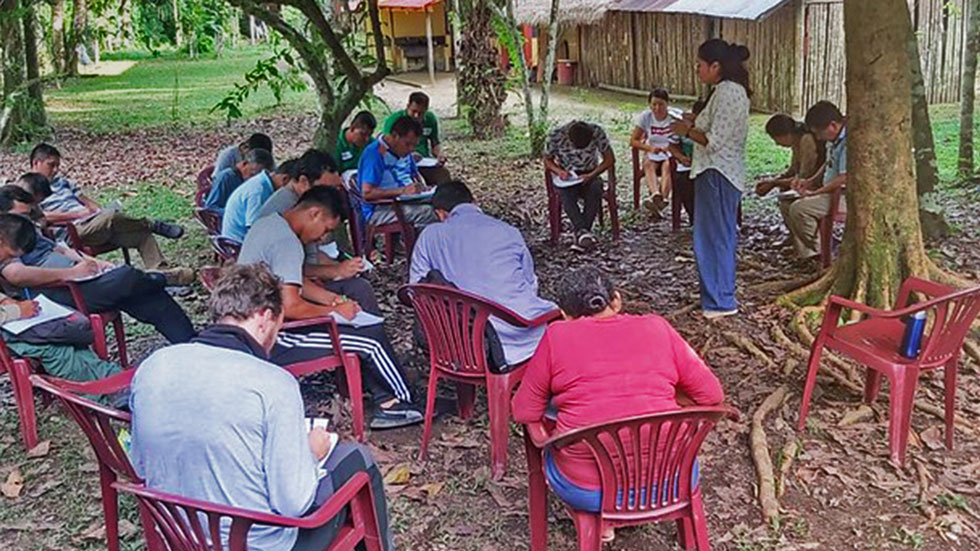
Throughout Latin America, we see an increasing spread of projects, strategies, and training programs to promote agroecology, offered by academia and, more often, NGOs and social organizations. Additionally, some international cooperation sources are devoted to supporting these efforts. This indicates that more people, families, and groups of producers see agroecology as a means to transform production methods, reshape the current food system, and foster new alliances on the subject.
The Comparte network, particularly the Participatory Guarantee System (PGS) group, has been developing training strategies, knowledge exchanges, and dialogues grounded in agroecology to establish both conceptual and practical foundations in this field. Beginning in 2021, we launched general agroecology training, followed by community strategies for agroecological transition, and now move toward an open and permanent school that addresses key topics to enhance and expand our actions in regions where we manage the Comparte PGS and other trust-based certification tools for producing and consuming agroecological products.
Aligned with local realities, we aim to guide the agroecology training school to revitalize local knowledge, compare it with other disciplines, and collectively address challenges in agroecological management, not only at the farm level but across territories and disciplines. The school is designed to be a continuous practice in agroecological management across each territory, with no set timeline but equipped with resources to make it a lasting endeavor.
A fundamental question guiding this local knowledge management strategy is: What challenges arise in agroecological transition processes? This question leads to another: What alternatives can we create to face these challenges? The school thus aims to generate collective strategies for addressing these issues and to strengthen and expand agroecological management.
The challenges in scaling agroecology are considerable, so it is crucial for organizations to continually readjust to their contexts. Through knowledge exchange and popular education, collectively adapted guidelines emerge, always rooted in agroecological principles.
From the Guarani in the south, the Quechua and Aymara in the Andean highlands, to the Tseltal Maya, Comparte finds a common language in agroecology.
Red Comparte
With information from desarrollo-alternativo.org