
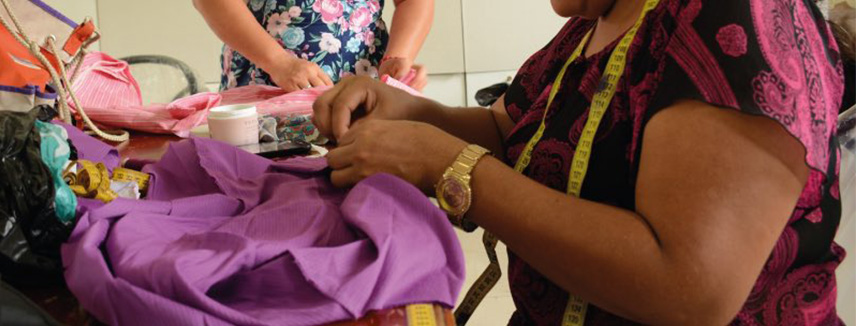
In a context where moving toward more equitable economic models necessarily involves addressing gender inequalities, the Comparte Network continues to deepen its commitment to equity through the Socioeconomic-Environmental Audit System (SASA).
Feature 3 of the SASA focuses on how initiatives, from feminist perspectives, promote gender equity and contribute to women’s empowerment. It is not merely about ensuring their participation, but about strengthening their leadership, their decision-making capacity, and the recognition of their role in economic and community life.
From Participation to Leadership
This approach translates into concrete processes within the network’s organizations. Rosa Alexandra Bejarano, a member of the Asociación Tejedora de Sueños, shares this perspective, highlighting that gender equity is embedded across all aspects of her initiative: “We don’t just seek equity on paper; we actively promote women’s real leadership in decision-making.”
The implementation of SASA has marked a turning point in this process. As she explains, it has enabled a shift from intention to action, generating significant changes in women’s participation. “It is no longer just about numerical participation, but about empowering leadership,” she affirms.
Self-worth and Community Transformation
One of the most significant advances has been the strengthening of women’s sense of self-worth. Through this process, many have begun to recognize their own potential and their ability to contribute to the well-being of their families and communities. “Before, we didn’t know how much we were worth or what potential we had to generate resources and support our families,” notes Bejarano.
This change impacts not only individuals but also the collective. Strengthening women’s leadership drives transformations in organizational and community dynamics, paving the way for more equitable and sustainable relationships.
In this regard, SASA has established itself as a key tool for supporting these processes, promoting a holistic approach that places gender equity at the center of development.
For the Comparte Network, these advances reaffirm a clear conviction: it is not possible to build sustainable economies without gender equity. Committing to women’s empowerment is also a commitment to more just, resilient territories with a greater capacity for transformation.