

On July 8th, the Comparte network held its second online Assembly, bringing together 31 participants (16 women and 15 men) from 9 countries, including seven from Latin America, Canada, and Spain. Representatives from social centers, universities, and allied organizations shared reflections and proposals about the network’s structure.
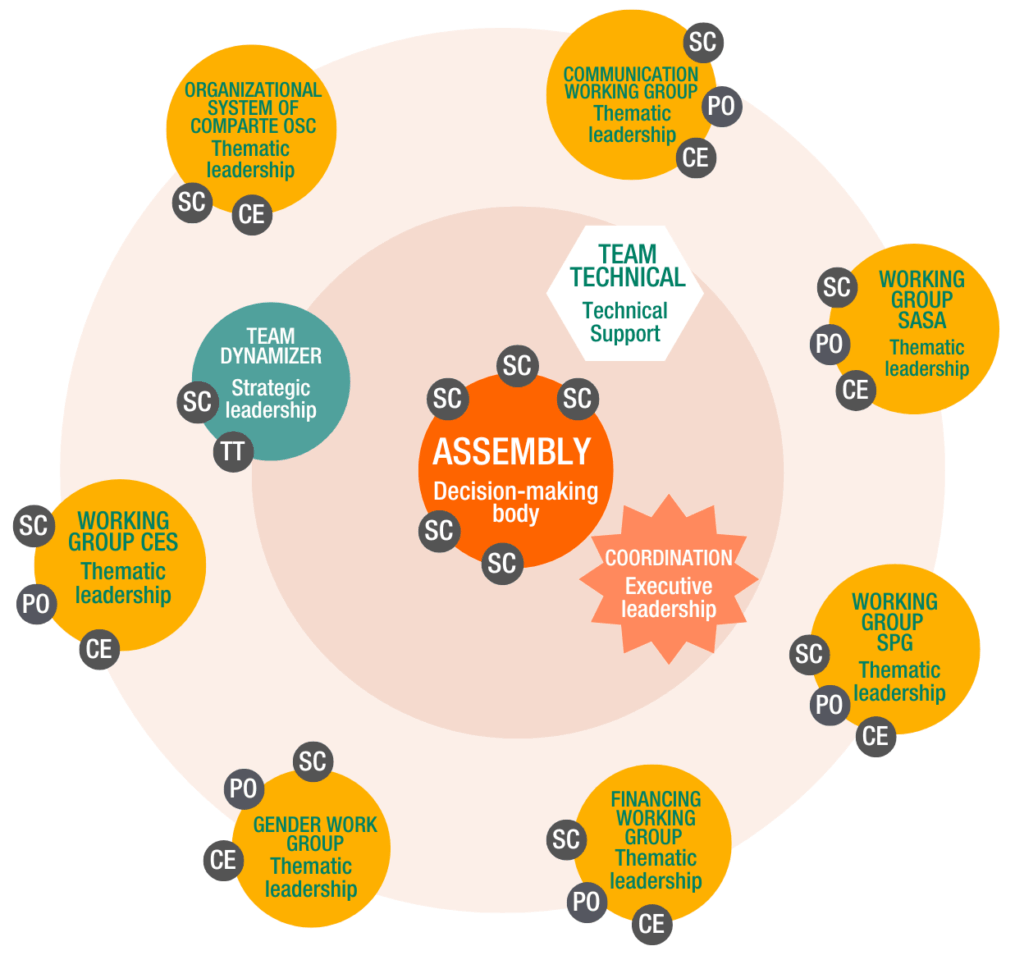
One of the main achievements was the collective validation of the Comparte Organizational System (SOC), a document developed between March and June 2025. This document establishes clear and efficient mechanisms for internal coordination, defines team composition and roles, and promotes better collaboration with allied actors. Participants worked in groups to review the document and provide suggestions, addressing key issues such as gender parity in representation and decision-making spaces within the network, the inclusion of new youth leadership, continuous monitoring and evaluation of the SOC and its functioning, the importance of broad and diverse participation of social centers in working groups, and the need to establish mechanisms to ensure the continuity of different instances and roles within the network. The coordinating team will update the document based on the feedback received and CPAL’s guidelines, with a plan to present it at the next online Assembly scheduled for November 18th.
Additionally, updates on the 2025 Annual Operational Plan were shared, and videos produced by the Participatory Guarantee System working group were presented. Two upcoming in-person events were announced: a gender-focused workshop organized by the Gender Working Group in Buga, Colombia, from October 20th to 24th, and a meeting on solidarity economic circuits in Guayaquil, Ecuador, from November 17th to 21st. Finally, it was confirmed that the network’s in-person Assembly will take place in 2026 in Chile, coinciding with the CPAL’s RCS Assembly.
Furthermore, it was reported that since May, the Comparte team has been working on formulating the 2026-2027 biennial plan, integrating proposals from the working groups and developing projects to secure funding for its implementation.
The Assembly closed with a spirit of collaboration and commitment, highlighting collective learning, a fraternal atmosphere, and a strong will to continue building a stronger, more inclusive, and sustainable network.