
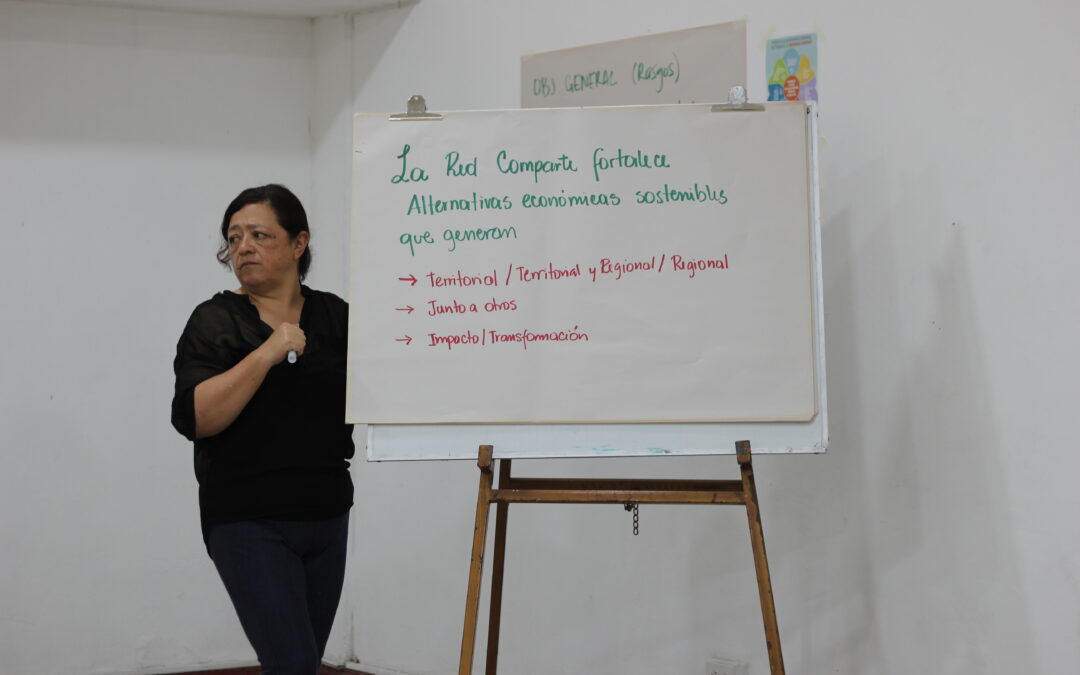
The Comparte Network has concluded the 2025 edition of the Socio-Environmental Audit System (SASA) — an exercise that strengthens our shared commitment to continuous improvement, accountability, and the construction of fairer and more sustainable economic alternatives. In the coming months, we will analyze the aggregated network-level information, but let’s take a look at some highlights.
This edition brought together 50 economic-productive initiatives from seven countries, along with ten Social Centers that accompany the process. Year after year, participation continues to grow, and reaching such a significant number of 50 initiatives reveals two things: first, that the Social Centers and Producer Organizations that took part in previous editions have adopted SASA as their own tool for ongoing use; and second, that more and more organizations are interested in learning about and applying it.
This growth in initiatives is also reflected in the number of people involved in SASA. Across these organizations, 1,478 member families are represented—26% more than last year—and 751 of these families are represented by women. Among the 50 initiatives, 18 are new, bringing greater diversity and encompassing 23 different value chains, with coffee and cocoa remaining the ones that bring together the largest number of people.
SASA25 confirms, once again, that this tool is not only a technical evaluation mechanism, but also a pedagogical and political exercise of the network—one that fosters collective learning, strengthens transparency, and sustains trust among producer organizations, social centers, and strategic allies.
With this milestone, the Comparte Network now moves forward to consolidate and analyze the information, which will be published in the Radar Report and Infographic formats. These will serve as key inputs for strategic decision-making across the network (see 2024 Report and Infographic). In a second phase, the tool will be refined to continue the process in 2026, incorporating innovations and learnings that will keep nurturing the construction of a social and solidarity economy in our territories.