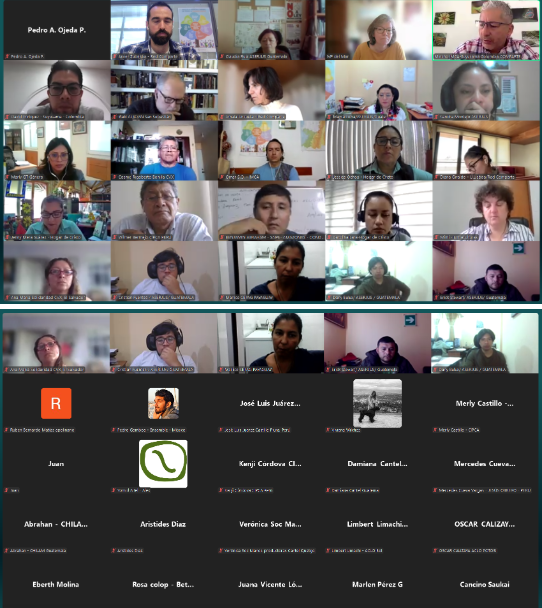
On Tuesday, April 1st, the results of SASA 2024 were presented — a key tool for the Red Comparte that allows Producer Organizations to review their progress in relation to the seven features, as well as engage in a collective exercise of transparency and accountability.
More than 50 people participated in this virtual meeting, representatives from Producer Organizations, Social Centers, universities, and funding entities. This broad and diverse participation reflects the collective commitment to continuous improvement, transparency, and the strengthening of the Network.
SASA —Socio-Environmental Audit System— is a tool co-designed in a participatory way between 2021 and 2023. It has already been implemented three times: SASA23, SASA24, and the current SASA25. Its objective is to facilitate a critical self-assessment process, offering each organization a collective mirror to reflect on their progress, challenges, and priorities with a transformative lens.
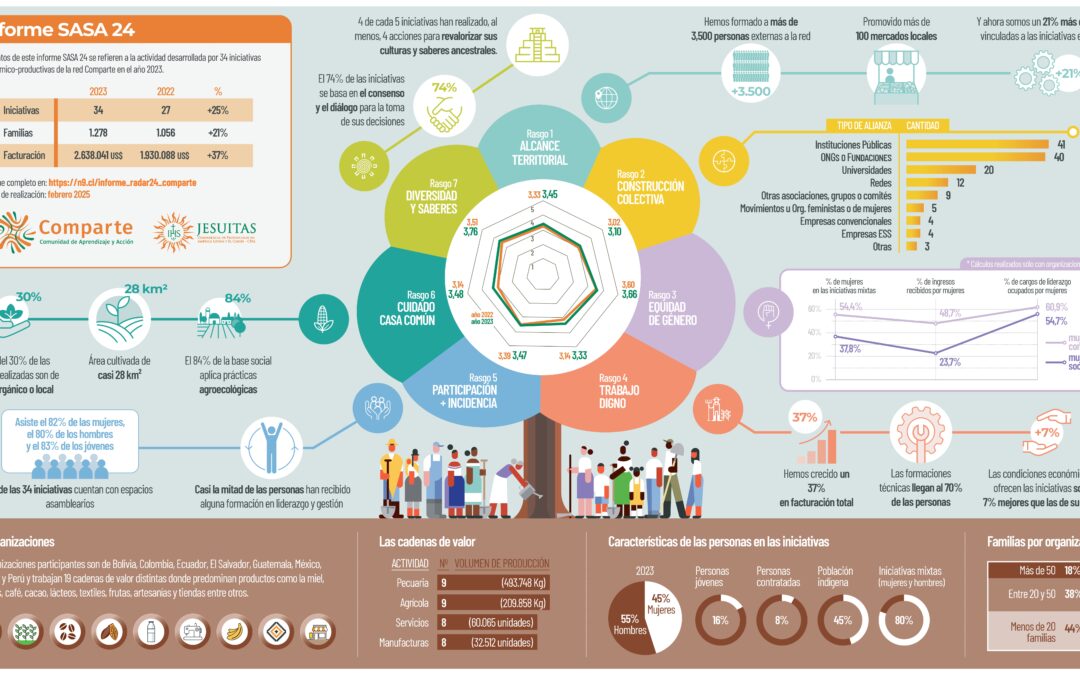
During the presentation, the global results of SASA24 were shared, highlighting significant progress in several traits, particularly in care for our common home, diversity and knowledge, and dignified work. Persistent challenges were also made visible in areas such as collective construction and economic conditions, which will remain a focus for the network’s support work.
The infographic presented during the event —available on the network’s website— visually summarizes the main data and includes comparisons with previous years. Additionally, the need to continue strengthening this system was emphasized: promoting its appropriation by organizations, automating some processes, and adapting the tool for smaller-scale initiatives such as family enterprises.
SASA is not just a technical instrument, but a political and pedagogical exercise that strengthens common identity, encourages shared learning, and nurtures collective decision-making within the Red Comparte.
If you missed the session or want to watch the presentation again, we share here the link to the recording.