
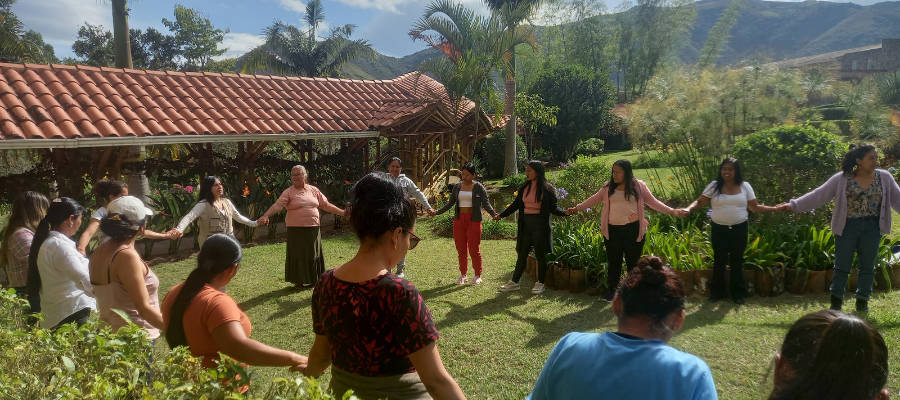
On April 8, the Comparte Network launched the collective process to build its Common Gender Framework (CGF) with an initial virtual workshop. This initiative aims to strengthen the gender perspective within the network, promoting fairer and more equitable relationships both within the internal dynamics of the social centers and in their support practices for economic-productive initiatives.
The CGF reflects the network’s commitment to Trait 3 of Comparte, which promotes gender equity and the empowerment of women from a feminist perspective.
The process is being led by the Gender Working Group of the Comparte Network, in coordination with the LAINES team from the Ibero-American University of Puebla (Mexico).
Three Key Areas of Reflection for 2025
In 2025, the network will focus its reflection on three key themes:
- Power relations and new masculinities
- Feminist and care-based economies within the social and solidarity economy
- Gender equality and care for our Common Home
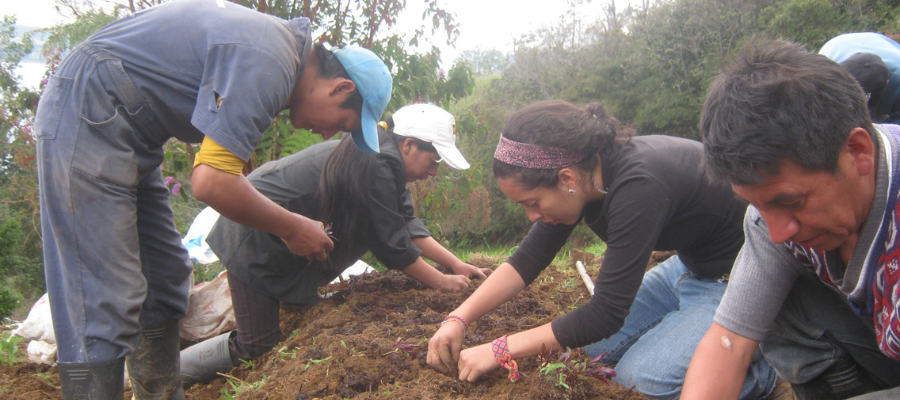
First Workshop: Power Relations and New Masculinities
The first virtual workshop was attended by 58 participants representing 12 Social Centers, 8 Producer Organizations, and allied entities. It addressed how patriarchy and gender roles and stereotypes are embedded in our daily practices, as well as the transformative paths already being undertaken by our Social Centers.
Following this virtual session, the participating social centers and producer organizations will hold internal reflection spaces on the topic, with the goal of enriching the Common Gender Framework with lived and diverse experiences from the territories where the Network is active.
A Collective Process to Integrate Gender Equity into Comparte
Inspired by Ignatian spirituality and the call to “walk with the excluded,” the Comparte Network embraces the CGF as a collective discernment exercise, where critical analysis, active listening, and transformative action come together to advance gender equity.
The next virtual workshop will be held on June 10 and will focus on feminist economics and care within the framework of the social and solidarity economy.